
MOOIEV BLOG
Film treatment and production proposal examples
See film treatment and production proposal examples from one sample film. Compare their sections, inspect PDF outputs and build the right document.
In this article 6 sections
Choose the document by the decision it needs to support
A treatment communicates the creative approach. A visual lookbook shows references that explain the world and intended images. A proposal gives a client the scope, deliverables, timeline, investment and team they need to discuss the work. Sending the same document for all three purposes can obscure the actual decision.
In Mooiev, Treatment and Proposal use material already in the project. They work best when the underlying brief, references, dates and budget are prepared. Start by deciding who will read the document and what you need them to understand or approve.
Prepare a treatment from the project’s own references
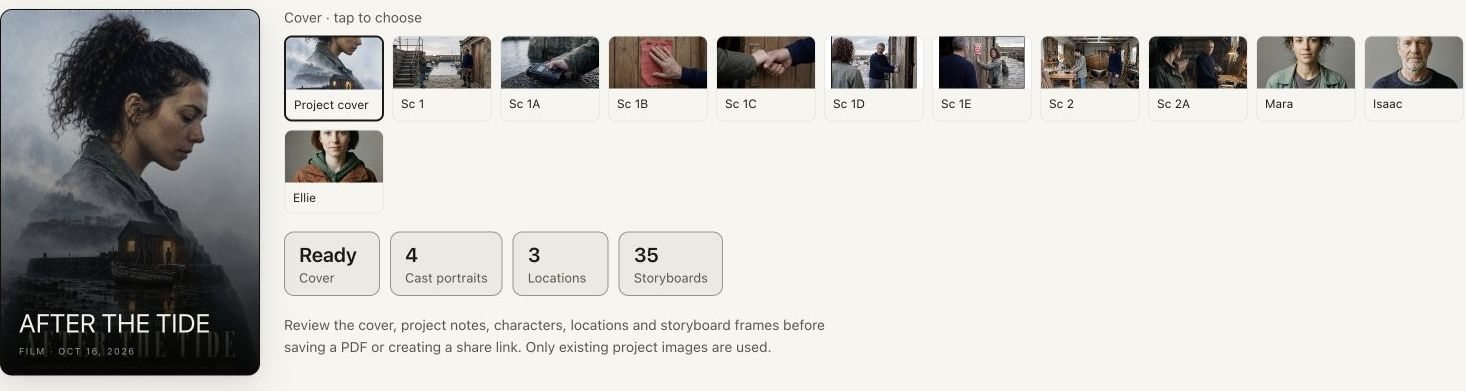
Add a strong project cover and clear notes about the approach. Populate the relevant characters and locations with useful reference images, then review the storyboard frames that explain the film. Treatment assembles existing project images rather than requiring a separate image-generation step.
For AFTER THE TIDE, the treatment should explain the harbour, workshop, Mara and the attention to recorded sound. A frame showing the recorder has a purpose in that story. Choose references that carry the concept instead of adding unrelated attractive pictures to fill pages.
Populate the proposal before preparing the preview
Proposal draws on the approach in project notes, deliverables and scope, dates, budget and team. Review those records first. A proposal cannot explain a delivery date you have not decided or an investment that has not been estimated.
Keep the scope specific: what will be made, the intended deliverables and which production days are included. Review the timeline from shoot through delivery and the budget you intend to discuss with the client. Add appropriate business branding in Settings when you want it represented in the document.
Inspect the entire document, including missing information
Open Preview treatment or Preview proposal and read the complete result. Check the cover’s proportion, names, references, text wrapping and page breaks. Inspect what the document actually includes rather than relying on the readiness summary alone.
Empty sections may be omitted, so a clean preview is not proof that the brief is complete. If the client needs to understand a deliverable or the crew needs a location detail, make sure that information appears explicitly in the document they receive.
Finish with a concrete review request
Ask for the decision the document is meant to support: “Are the three deliverables and the delivery date correct?” or “Does this treatment capture the workshop scene’s intended light and mood?” A focused request produces feedback you can act on.
Carry the approved changes back into the project notes, references, schedule or budget. The best document workflow leaves the production team with one understandable plan, not a polished presentation that describes an older version of the job.
Understand the full document set