
PRODUCTION BUDGET / COSTS IN CONTEXT
Plan your film and video budget.
Keep the quantities, rates and production assumptions close to the work they describe.
Project work requires an account. Explore public examples and free tools before starting.
01 / THE WORKFLOW
Make each amount explainable
A line item needs a description, quantity, unit and rate. “Camera” alone does not tell a producer whether the estimate covers a rental day, an operator or an existing piece of equipment. State the working assumption before reviewing the total.
Account for preparation, production and post-production. The creator’s time matters even when they own the camera or are recording alone.
02 / THE WORKFLOW
Separate the estimate from the client price
An internal cost estimate helps you understand the work. A client proposal states the delivery scope and commercial offer you have agreed to discuss. Review expenses, time, revisions, usage and contingency before deciding what the job will cost.
The product-video example contains four illustrative costs, a subtotal and a 10% contingency. Its rates are assumptions for the exercise, not current market rates or a recommendation about what to charge.
03 / THE WORKFLOW
Review costs when the plan changes
Extra shoot days, another location or new deliverables can change the work and the budget. Reconcile the estimate with the schedule, equipment and crew responsibilities instead of reviewing the total by itself.
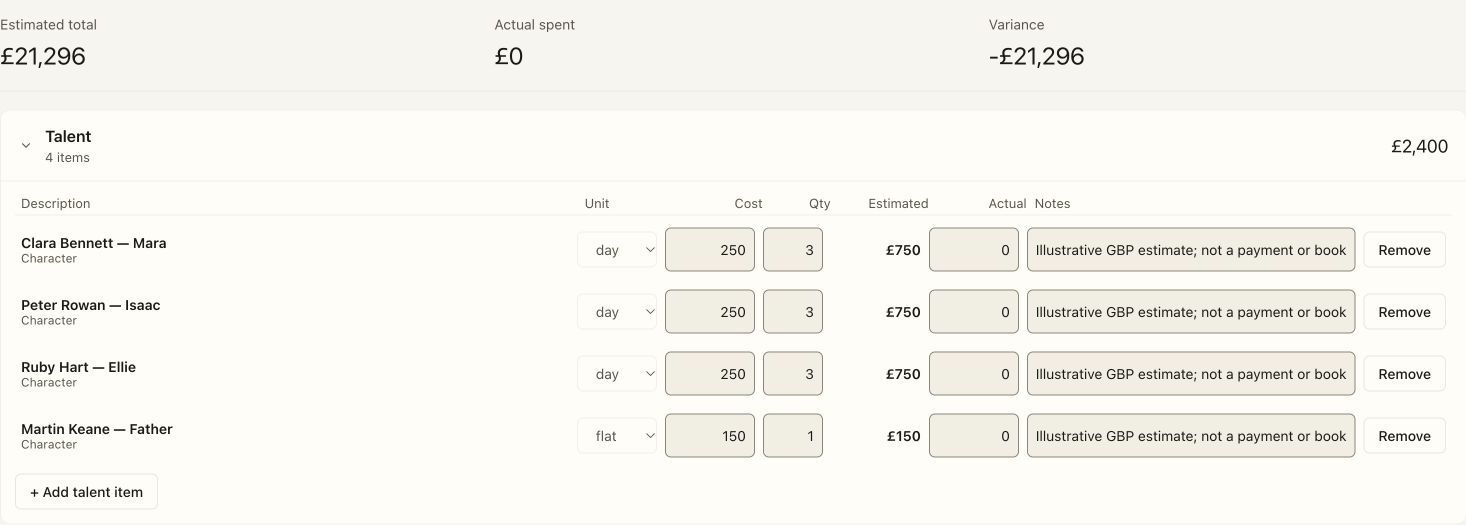
The sample AFTER THE TIDE budget is fictional. Replace its rates and quantities with the costs you have actually checked for your production. This planning workflow does not provide accounting, tax filing or payment collection.
Bring the plan and the people together.
Start with a project, or inspect a useful free resource first.